

Sports betting in LATAM: an industry booming with growth
Last update: May 2025 In recent years, Latin America has gone from being a minor player to becoming one of the most dynamic markets in the global sports betting industry. Driven by regulatory changes, increased digitization, and new consumer habits, the region is charting its own path toward a more
Steff Cervantes
March 18, 2024
Last update: May 2025
In recent years, Latin America has gone from being a minor player to becoming one of the most dynamic markets in the global sports betting industry. Driven by regulatory changes, increased digitization, and new consumer habits, the region is charting its own path toward a more structured and competitive ecosystem.
In this blog, we analyze how the main sports betting markets in the region are evolving and what opportunities are emerging for operators, financial institutions, and payment platforms.

Colombia: pioneer in regulation and regional model
Since the legalization of online gambling in 2016, Colombia has established itself as the regulatory benchmark in Latin America. In 2024 alone, Colombia [surpassed 8 million registered users on online gambling platforms](https://mascolombia.com/situacion-de-las-apuestas-deportivas-en-colombia/?utm_source=chatgpt.com), consolidating its position as a regional leader in regulation and digital adoption.
Law 643 of 2001 remains the backbone of the sector, requiring a high standard of tax compliance. Companies and users must strictly adhere to the fiscal framework, as penalties for evasion can be severe.
Sports betting [grew between 30% and 40% in 2024](https://forbes.co/2024/08/28/deportes-2/apuestas-deportivas-creceran-40-en-colombia-este-2024-por-cuenta-de-los-grandes-eventos?utm_source=chatgpt.com), driven by sporting events and a robust offering from legal operators.
As of April 2024, [the sector transferred $117.068 billion Colombian pesos to the healthcare system](https://www.elcolombiano.com/deportes/copa-america-2024-apuestas-deportivas-colombia-selecciones-favoritas-AP24816024?utm_source=chatgpt.com), and total revenue is expected to exceed one trillion pesos by the end of the year.
Mexico: Challenges in sports betting
With an estimated value of [more than $60 billion Mexican pesos in 2024](https://mexico-de-casino.com/apuestas-deportivas-en-mexico-2025-crecimiento-tendencias-y-desafios/?utmsource=chatgpt.com), Mexico remains in third place in the region in terms of volume. The frequency of betting has also increased: [25% of Mexican adults bet several times a week](https://el-mexicano.com/cienciaytecnologia/el-mercado-de-juegos-en-linea-en-mexico-sector-en-expansion/2214314?utmsource=chatgpt.com).
However, the market still faces challenges. Obtaining licenses requires meeting strict criteria, but even with them, navigating the legal environment remains complex. The National Lottery, for example, achieved revenue of more than $13.89 billion pesos in 2022, thanks in part to its wide range of physical and digital payment methods.
The lag in banking penetration remains a brake on growth, but also a great opportunity for operators that integrate innovative payment technologies and promote financial inclusion.
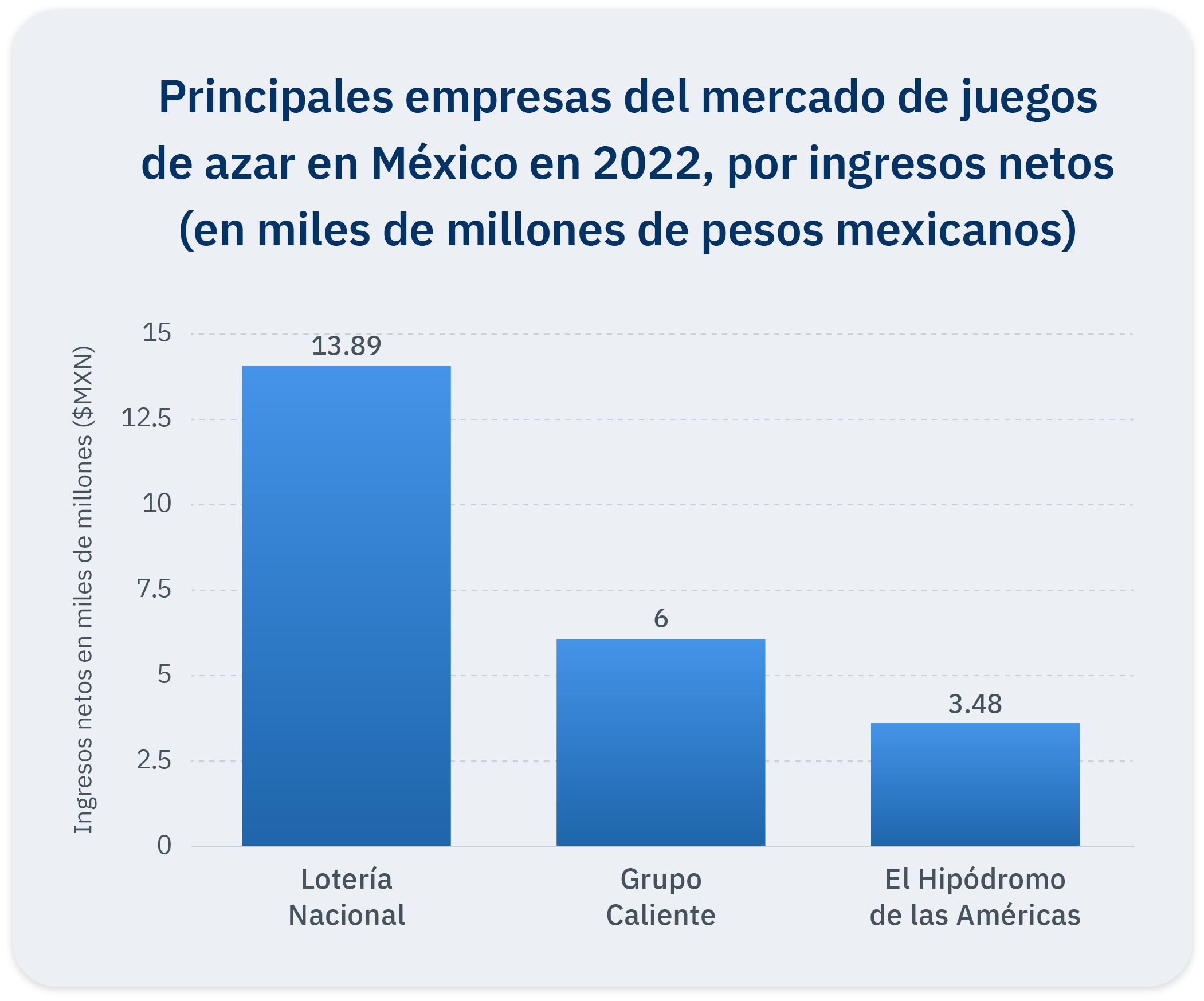
In Mexico, more than just a formality, the process of obtaining a license involves a series of criteria. And while having a license and an established entity in Mexico is a crucial step, it does not guarantee legal compliance, given the complex web of restrictions governing the market.
Despite this, cases such as the National Lottery, which generated more than $13.89 billion Mexican pesos in 2022, show that diversifying payment methods (physical and digital) can make a big difference in an operator's success.
Despite the success of the National Lottery, Mexico continues to have a lower banking penetration rate than other countries in the region, suggesting vast potential for the inclusion of digital payment technologies in the betting market.
Brazil: the champion of sports betting
Brazil has established itself as the largest market in Latin America, with a betting volume that reached $7 billion in 2023 and 23 million online users in 2024utmsource=chatgpt.com), equivalent to 15% of the population._
Growth was largely driven by the popularity of Pix, the instant payment system that has revolutionized the way people bet and collect winnings. Regulation has also moved forward: in January 2025, a new law came into force that comprehensively regulates the sector, addressing advertising, taxation, and licensing.
The market experienced remarkable growth following the regulation of the sector in January 2025, with a 90% increase in visits to online betting sites during the first quarter of the year.
Brazil is already a model to follow in the world of sports betting, combining explosive growth with robust regulation and an innovative payment infrastructure. With these elements in place, the future of sports betting in Brazil looks brighter than ever.
Chile: a vibrant sports betting scene
Although online sports betting has gained momentum in Chile, the industry continues to operate in a legal limbo. However, the sector's sustained growth and economic impact have created pressure to create a formalized licensing regime that protects both operators and consumers.
One of the main obstacles to the full legalization of sports betting in Chile is the state monopoly on lotteries, as well as the intervention of the Superintendencia de Casinos de Juego (SCJ). These actors have taken strong measures against betting operators, making it difficult to move toward full legalization.
Despite these challenges, online betting has become an important source of revenue for sports in Chile. However, the lack of clear legislation has left the market in legal limbo, with an urgent need to establish a licensing regime for online operators.
Furthermore, as of July 1, 2024, a new law regulating online gambling in Chile came into effect, establishing a clear legal framework for operators and protecting consumers. Did you know
The law includes [a 2% annual tax on gross revenue](https://www.hacienda.cl/noticias-y-eventos/noticias/sala-de-la-camara-aprobo-el-proyecto-de-ley-que-regula-el-desarrollo-de-las?utm_source=chatgpt.com) on sports betting, intended to finance national sports through the National Sports Institute (IND).
Although the challenges are evident, there are also exciting opportunities to transform the industry and provide a safe gaming experience. The future of sports betting in Chile lies in the regulatory decisions that will be made in the coming years.
Peru: a path full of contradictions
In Peru, the enactment of the law regulating online gambling and sports betting in August 2022 generated high expectations. However, errors in its wording, such as the omission of tax payments by foreign operators, forced a rapid rectification through Bill 3595/2022.
This situation has created uncertainty and pressure on operators, who must comply with the new provisions within a very short time frame. Despite this, the regulatory progress opens a window of opportunity to modernize the payment ecosystem and strengthen market confidence.
In particular, the rise of RTP solutions (real-time payments) represents a competitive advantage for the sector by facilitating agile transactions during sporting events and accelerating the payment of prizes.
Despite this, since February 2024, Peru has implemented [Law No. 31557](https://www.gob.pe/institucion/mincetur/noticias/1159922-peru-se-consolida-como-lider-regional-en-la-regulacion-de-juegos-de-azar-y-promocion-del-juego-responsable?utm_source=chatgpt.com), regulating online sports betting and establishing a 12% tax rate on the profits of operating companies.
In the first year of regulation, [more than 60 betting houses were authorized by the Ministry of Foreign Trade and Tourism (Mincetur)](https://as.com/futbol/como-reconocer-casas-de-apuestas-legales-en-peru-n/?utm_source=chatgpt.com), consolidating Peru as a regional benchmark in gaming regulation.
Want to learn more about this fascinating topic?
[Download our full Kushki Insights report here ](https://assets.ctfassets.net/51xdmtqw3t2p/7FYz0sTKnazrRFfdmxUGbT/e8cf59c90f27b39214962b45985c5437/Paper-ApuestasDeportivas1.pdf?utmsource=blog+web&utmmedium=blog&utm_campaign=contenidosmarzo)
Tags